

Case Studies
Hornsey Town Hall
“Hornsey Town Hall HERO” by Make Architects via source
Hornsey Town Hall is a significant example of Art Deco civic architecture in London. Located in Crouch End and Grade II* Listed, it has long been a landmark within the local community.
Completed and reopened in phases from 2020 for Far East Consortium, the project involved restoring the former municipal headquarters while introducing a substantial new residential element. Make Architects led the design, with Ardmore Construction delivering the build.
The development now combines restored civic spaces with 144 new apartments, carefully integrating contemporary living within a historic setting.
The Context
Working within a Grade II* Listed building immediately shaped the direction of the project. The original structure carries architectural and cultural significance, which meant every material decision had to support the existing character rather than compete with it.
The brief was twofold:
- Restore and reinstate the original civic building.
- Deliver high-quality modern residential accommodation alongside it.
The success of the scheme depended on clearly distinguishing between the historic core and the new build, while maintaining cohesion across the wider development.
Phase One: Refurbishment of the Original Building
The refurbishment focused on restoring key civic interiors and ensuring they could function for modern use without losing their Art Deco identity.
Flooring Specification
- Product: TW E954
- Pattern: Herringbone
- Size: 90 x 350mm
- Approximate area: 989m²
The herringbone format was chosen for its alignment with traditional detailing and period architecture. The 90 x 350mm scale provided appropriate proportion within the larger civic rooms, maintaining visual balance with existing architectural features.
Durability was also a key requirement. These areas needed to accommodate high footfall while retaining a refined appearance consistent with the building’s heritage status.
The result is understated and contextually appropriate. The flooring supports the restored interiors without drawing attention away from original features.
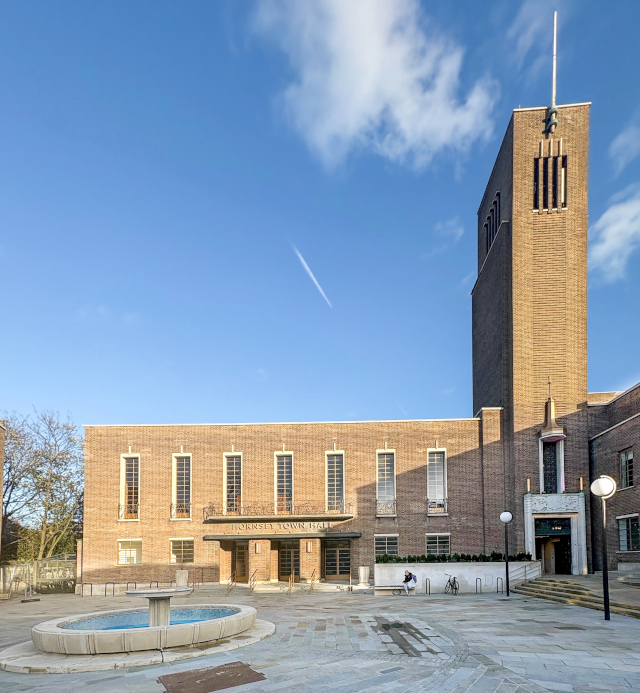
“Restored Hornsey Town Hall” by Hornsey Historical Society via source
Phase Two: New Residential Element
Alongside the restoration, the scheme introduced a newly constructed residential component comprising 144 apartments, as well as a marketing suite.
Here, the design direction shifted deliberately.
Flooring Specification
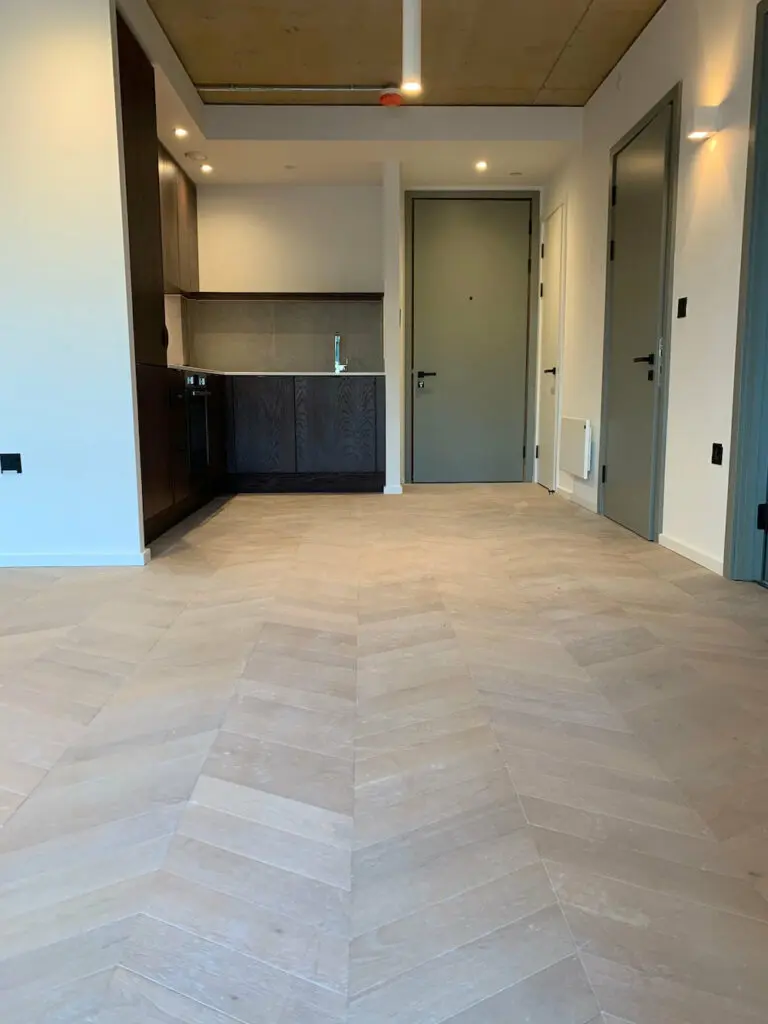
- Product: TW E973
- Pattern: Chevron
- Light grey finish
- Specified as AB grade
- 150m² installed within the marketing suite
Specified for installation across 144 apartments
The chevron format provides a sharper, more contemporary aesthetic than herringbone. It introduces direction and movement within open-plan living spaces, aligning with modern interior expectations.
The light grey tone enhances natural light and complements glazing and contemporary finishes. Specifying AB grade ensured consistency of appearance across multiple units, which was essential for both quality control and brand presentation.
The residential interiors were not intended to replicate the historic building. Instead, they offer a clear contrast: modern, clean and architectural.
Coordination and Delivery
Delivering both phases simultaneously introduced technical complexity.
The refurbishment required careful handling of listed fabric and strict adherence to heritage requirements. Installation tolerances within the existing structure differed significantly from those in the new build.
In total, nearly 1,000m² of herringbone was installed within the historic building, alongside phased chevron installation across the residential units. Maintaining pattern accuracy, tonal consistency and installation standards across both contexts required close coordination between architect, contractor and supplier.
Outcome
The completed development achieves a clear balance between restoration and renewal.
Within the Town Hall, herringbone flooring reinforces the period character of the civic spaces. It feels appropriate to the architecture and reinstates a sense of formality and rhythm consistent with the building’s origins.
Within the apartments, the chevron flooring establishes a contemporary identity. The lighter tone and directional pattern contribute to a modern residential atmosphere, distinct from but complementary to the historic core.
Hornsey Town Hall now functions as both a restored landmark and a new residential address. The project demonstrates how pattern, tone and material selection can define two different environments within one cohesive development without compromise in either.