
Case Studies
University of Liverpool: School of Architecture
Engineered Natural Oak Flooring Installation
Precision Engineered Oak Flooring for a Contemporary Educational Environment
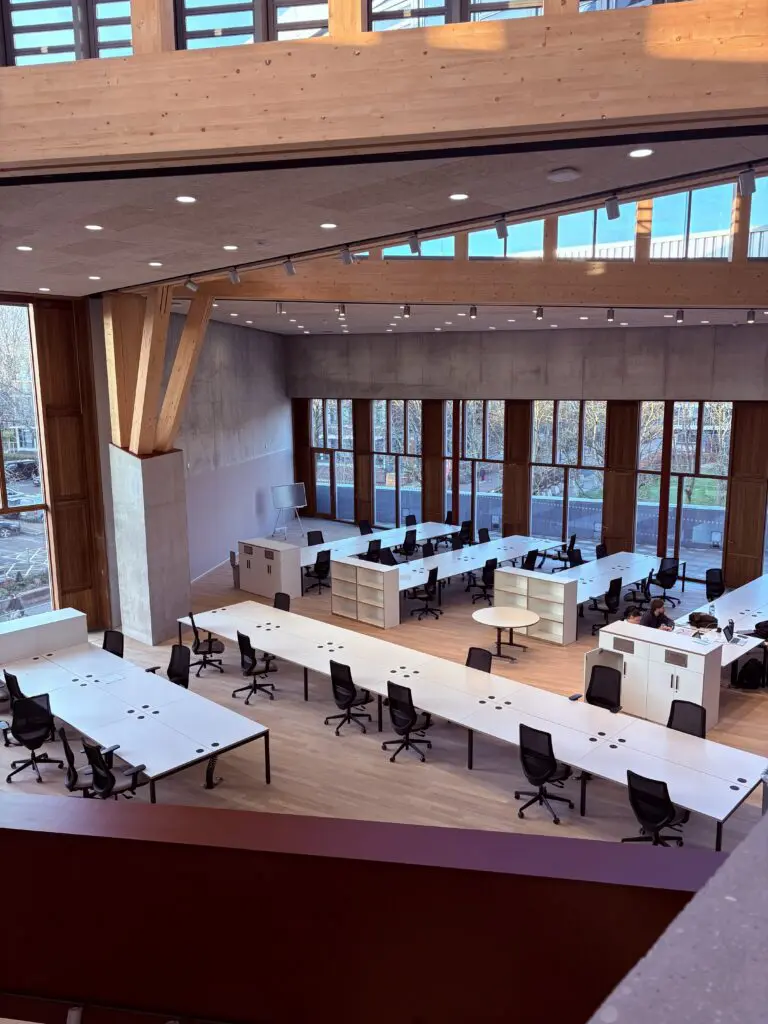
The School of Architecture at the University of Liverpool required a flooring solution that reflected the quality and discipline of its architectural setting while delivering long-term durability in a high-traffic academic environment.
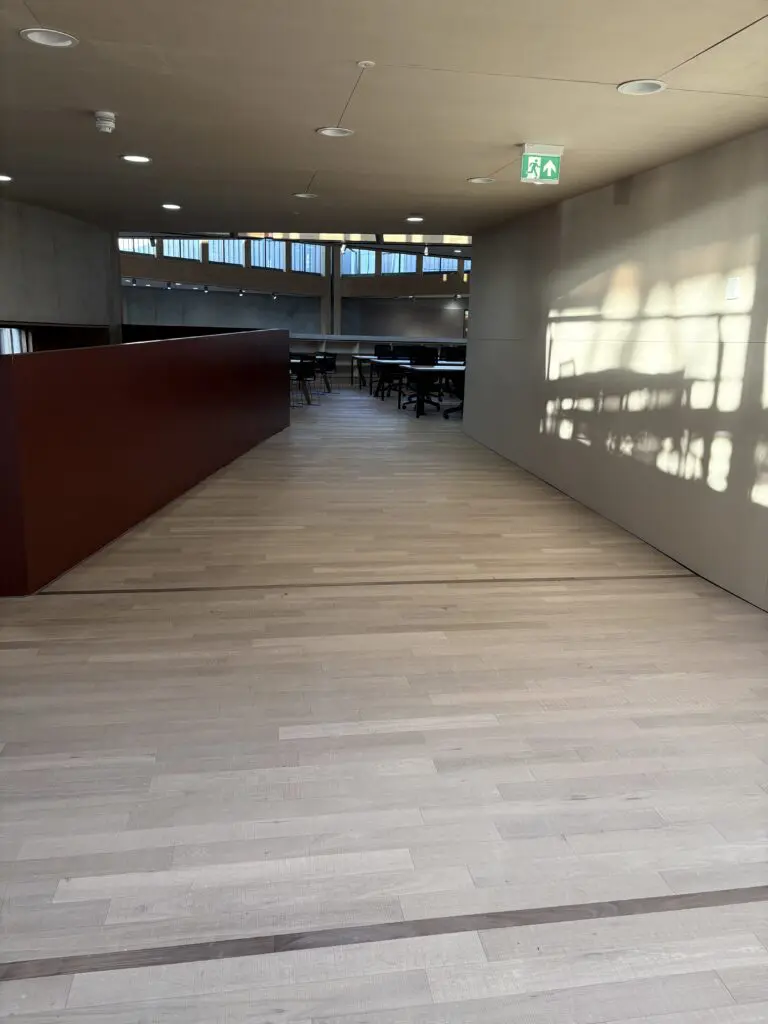
Engineered natural oak flooring from The Solid Wood Flooring Company was specified and installed throughout the space, combining refined material quality with technical precision. Installed at a 45-degree angle and fully bonded to a raised access floor system, the project demanded detailed planning, expert setting out and high standards of workmanship.
Why Engineered Oak for University Environments?
Engineered wood flooring is particularly suited to educational and commercial interiors where environmental stability and structural integrity are essential.
Compared to solid timber, engineered construction offers:
- Enhanced dimensional stability
- Reduced movement across larger areas
- Greater suitability for bonded commercial installation
- Improved performance over raised subfloor systems
In a university environment where temperature fluctuations, varying occupancy levels and continuous use are expected, engineered oak ensures long-term reliability without compromising on natural character.
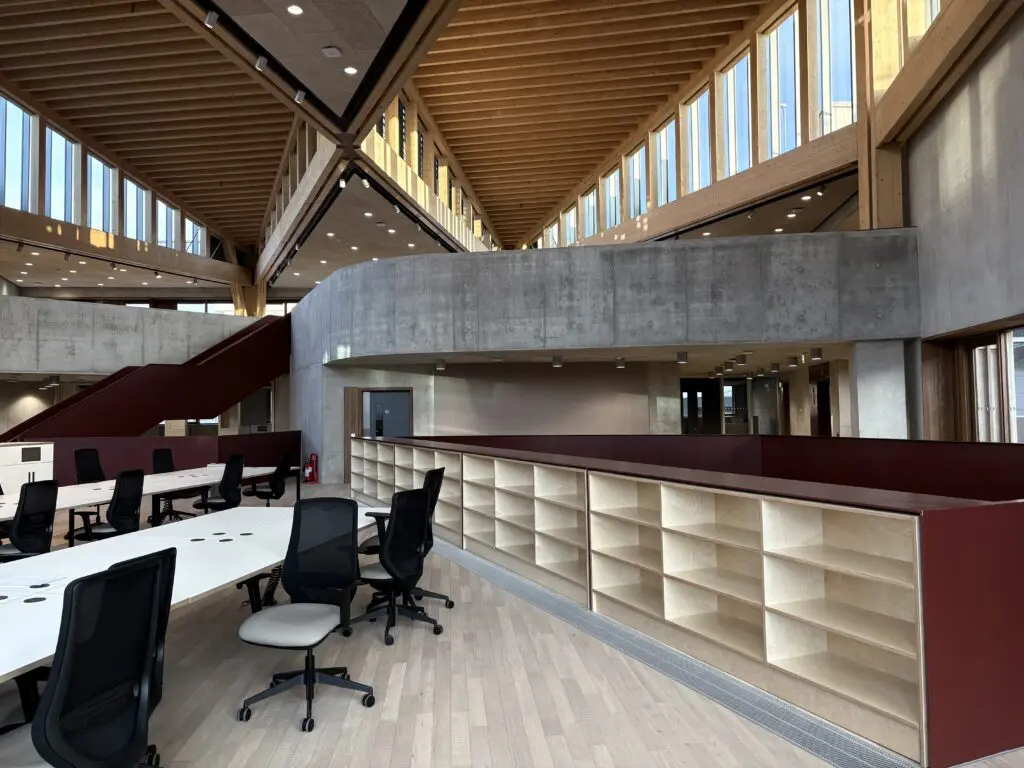
The natural oak surface layer introduces warmth and texture, softening the architectural lines of the interior while maintaining a professional and contemporary appearance.
A 45-Degree Diagonal Installation
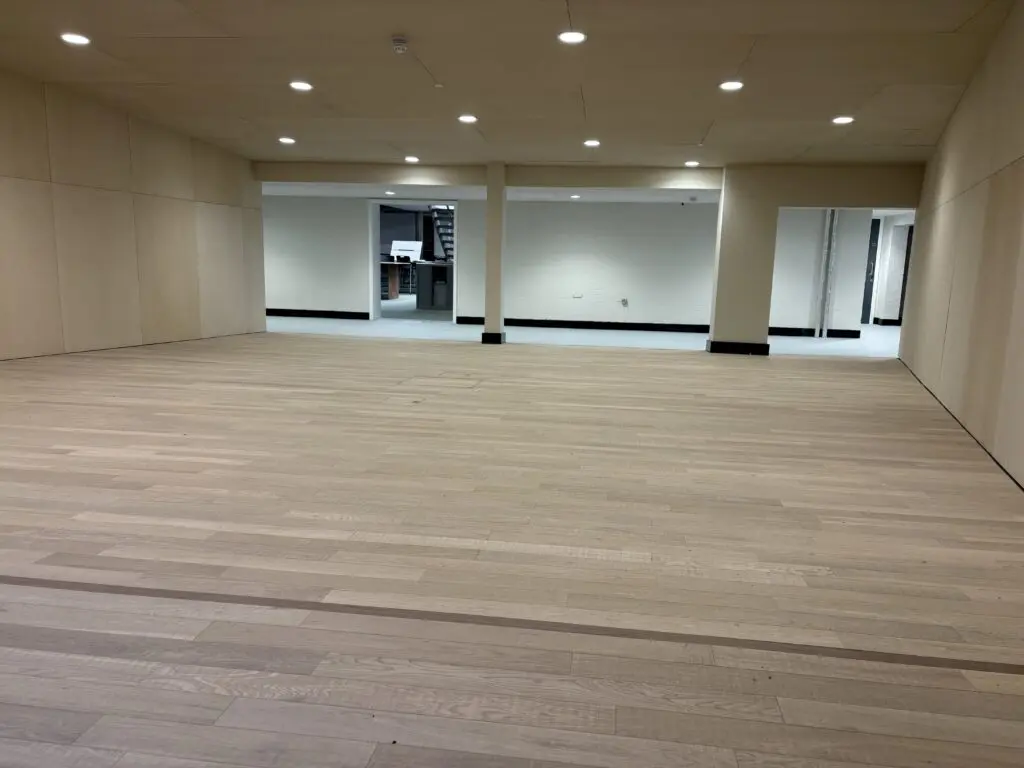
One of the defining features of this project was the decision to install the boards at a 45-degree angle throughout the building.
Diagonal layouts introduce visual dynamism and directional flow, enhancing spatial movement and reinforcing architectural geometry. In creative environments such as a School of Architecture, this subtle sense of movement complements the purpose of the space.
However, diagonal installation significantly increases technical complexity.
Unlike a straight-lay format, a 45-degree orientation requires:
- Meticulous setting out from the outset
- Precise calculation of board alignment across multiple rooms
- Careful planning at architectural transitions
- Tight control of tolerances at junctions and thresholds
Even small inaccuracies become highly visible when boards run diagonally, particularly across open-plan areas with long sightlines.
The successful delivery of this layout relied on careful coordination, detailed measurement and disciplined installation practices at every stage.
Installation Method: Fully Bonded to a Raised Access Floor
The engineered oak flooring was fully bonded to a raised access floor system.
Raised access floors introduce additional considerations within commercial environments. Achieving a secure and durable installation requires:
- Correct substrate preparation
- Appropriate adhesive specification
- Even bonding across panel joints
- Controlled moisture management
A fully bonded system was selected to provide:
- Increased structural stability
- Reduced movement and vibration
- Improved acoustic performance
- Long-term durability in a high-traffic setting
This approach ensures the flooring performs consistently while maintaining the clean, seamless appearance required in a contemporary educational space.
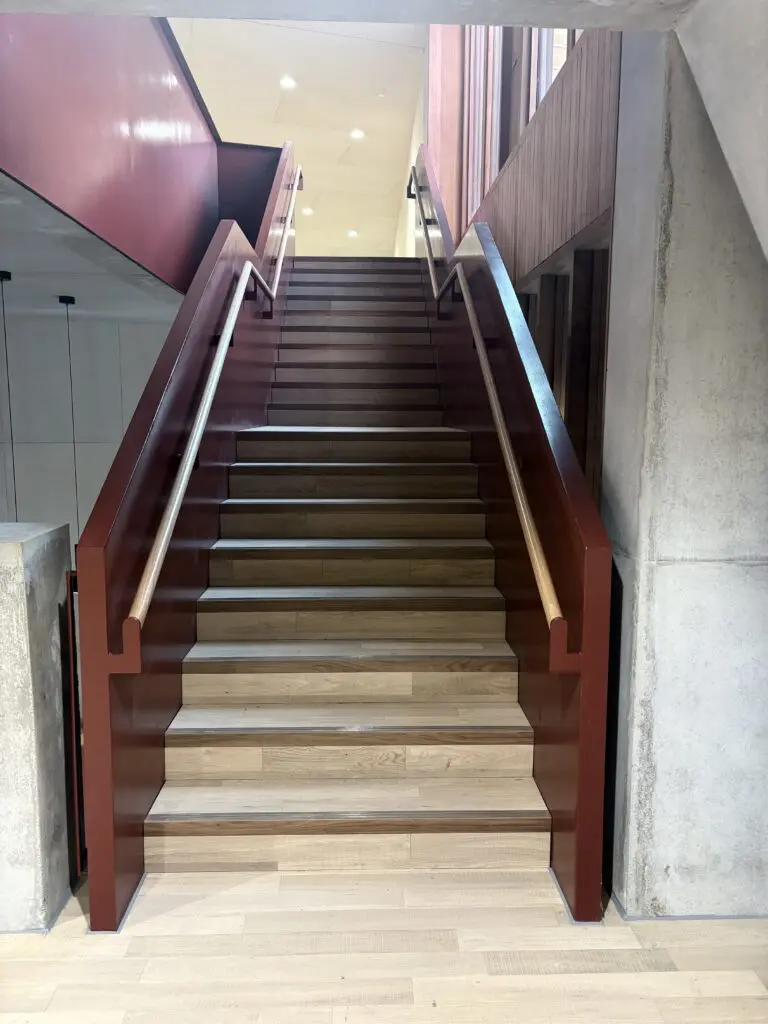
Attention to Detail at Every Interface
The building’s internal layout required the flooring to flow across various spaces and interfaces. Transitions between areas, changes in direction and architectural junctions all required precise execution.
Maintaining consistent alignment across these conditions is particularly demanding with diagonal installations. The integrity of the pattern depends entirely on accurate initial setting out and disciplined continuation throughout the installation.
What appears effortless in the finished interior is the result of detailed pre-installation planning and skilled craftsmanship on site.
The Outcome: Performance, Precision and Architectural Cohesion
The completed installation delivers a cohesive, natural oak surface that enhances the architectural clarity of the School of Architecture.
The 45-degree orientation introduces subtle movement and visual interest without overwhelming the design. The engineered construction ensures dimensional stability and suitability for a demanding university environment.
Fully bonded to a raised access floor system, the flooring is designed for longevity, resilience and consistent performance under daily use.
The project demonstrates how engineered wood flooring can successfully meet both aesthetic and technical requirements within commercial and educational environments, combining architectural sensitivity with robust performance.